INTRODUCTION
THE PURPOSE OF THE WORKSHOP
The overall goal of the initiative is to strengthen youth resilience against crime and violence in Philippi by fostering human rights awareness and building skills in conflict mediation.
Specific Objectives:
- Raise awareness among youth about their fundamental human rights and responsibilities.
- Equip participants with conflict mediation skills to reduce violence within families, schools, and peer groups.
- Foster critical thinking to resist recruitment into gangs and challenge harmful narratives promoted on social media.
- Rebuild trust and agency, enabling young people to engage positively with their community and local institutions.
- Promote community safety and cohesion by empowering youth as advocates and role models for peaceful solutions.
TOPICS COVERED DURING THE WORKSHOPS
- Human Rights Concepts
Participants explored the fundamental concepts of human rights, understanding what they are and why they matter for individual dignity, equality, and community well-being. This foundation helped participants appreciate the relevance of human rights in everyday life and community development.
- Principles of Human Rights
The training emphasised key guiding principles, such as equality, non-discrimination, dignity, participation, and accountability. Participants learned how these principles shape both governance and social interactions, providing a framework for just and equitable communities.
- Categories of Human Rights
Participants examined the main categories of rights, including civil, political, economic, social, and cultural rights. This helped them understand the range of rights that must be respected, protected, and fulfilled at individual, community, and national levels.
- Socio-Economic Rights
The workshop focused on rights related to health, education, housing, water, electricity, and adequate living standards. Participants discussed the importance of access to these essential services as a foundation for equality and social stability.
- Responsibilities of Government
Participants learned about the role of government in protecting, promoting, and fulfilling human rights. This included understanding how governance, accountability mechanisms, and policy implementation directly affect citizens’ ability to exercise their rights.
- Chapter 9 Institutions
The training introduced participants to institutions such as the Human Rights Commission and the Public Protector. These bodies were presented as critical mechanisms to ensure transparency, accountability, and redress in cases where human rights are violated.
- International Instruments for Human Rights
Participants explored treaties, conventions, resolutions, and regional frameworks that guide human rights protection, including African and global instruments. This provided a broader understanding of the obligations and standards governments are expected to uphold.
- Building Human Rights Communities
Practical strategies and tools were shared to help participants foster community awareness, advocacy, and active engagement in human rights promotion. This included community mobilization techniques and approaches to civic education.
- Foundations of Human Rights Education
Participants were taught approaches to human rights education, understanding both the “what” and “why” behind teaching these rights to various community groups. The aim was to create sustainable knowledge and promote respect for human rights.
- Rights of Vulnerable Groups and Migrants
The workshop highlighted the protection of women, children, persons with disabilities, refugees, and asylum seekers. Participants discussed strategies for inclusion and safeguarding the rights of marginalized populations.
- Experiential Learning
Through role-playing, simulations, and the Human Rights Squares activity, participants were able to practically apply their knowledge and experience the challenges faced by marginalized groups.
- Human Rights Community-Building Tools
Participants learned practical exercises to assess community knowledge, promote discussion, and engage residents in human rights initiatives.
- Building Blocks of Human Rights Education
The training provided step-by-step guidance on creating sustainable community awareness programs, including monitoring and evaluation for continuous improvement.
WORKSHOP ACTIVITIES
The Human Rights for Social Cohesion Workshop for Community Facilitators formed the first component of a five-day training programme. These initial two days focused on strengthening human rights literacy, while the remaining three days were dedicated to conflict mediation. The aim was to equip community facilitators in Philippi with the knowledge and practical tools necessary to engage effectively with community challenges.
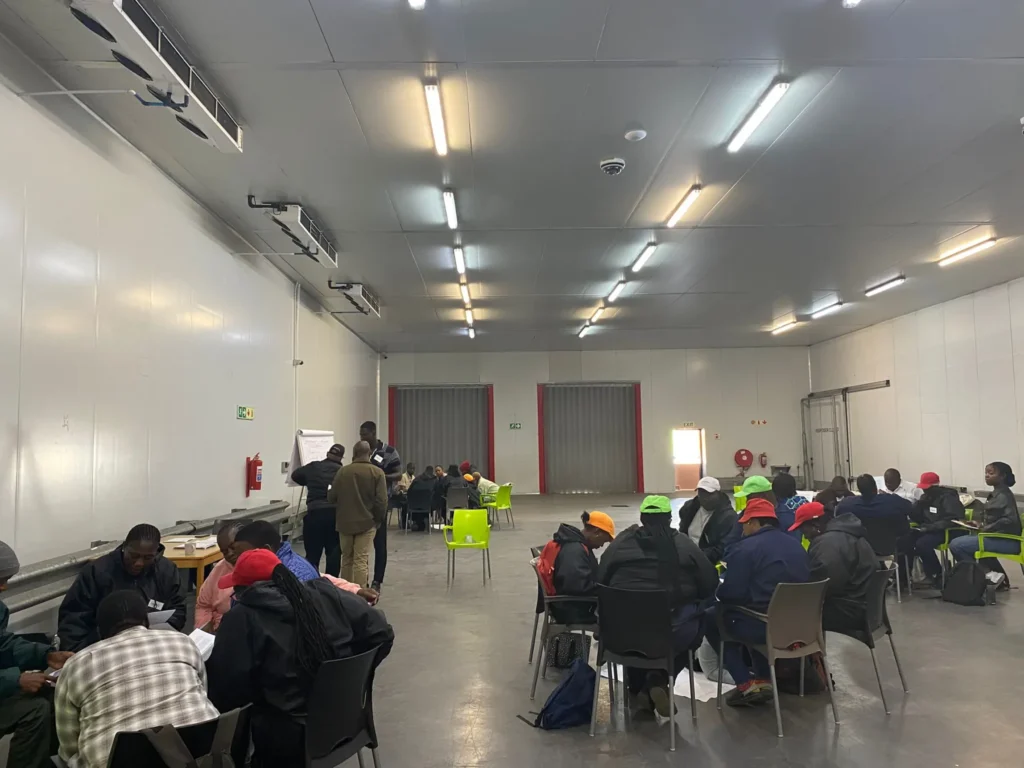
Day 1: Human Rights Foundations
Opening and Introductions
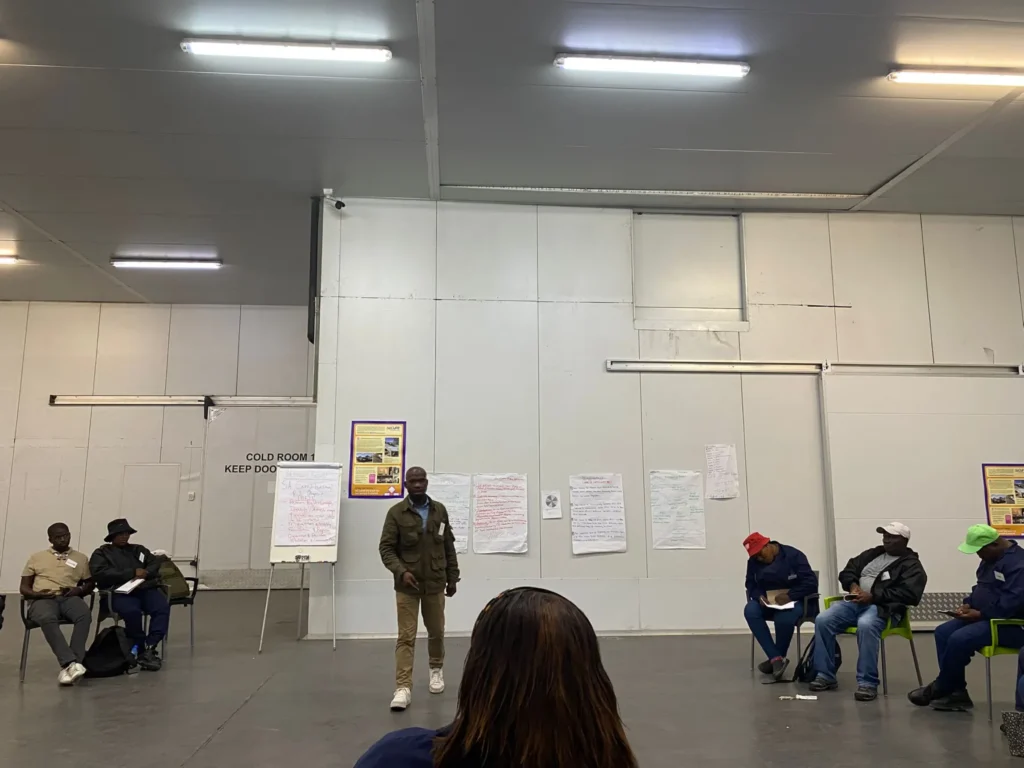
The day began with formal welcoming remarks, housekeeping, and the establishment of ground rules. The facilitators then created a relaxed atmosphere by inviting participants to introduce themselves through an icebreaker: choosing a vegetarian substitute if meat were unavailable. The activity sparked laughter and connection, revealing shared hometowns, clan names, and cultural threads across Philippi. This rapport enriched the learning environment and set the tone for open dialogue. Participants were divided into four groups named after African countries—Burkina Faso, Botswana, the Kingdom of Eswatini, and Ethiopia
Human Rights Squares Activity
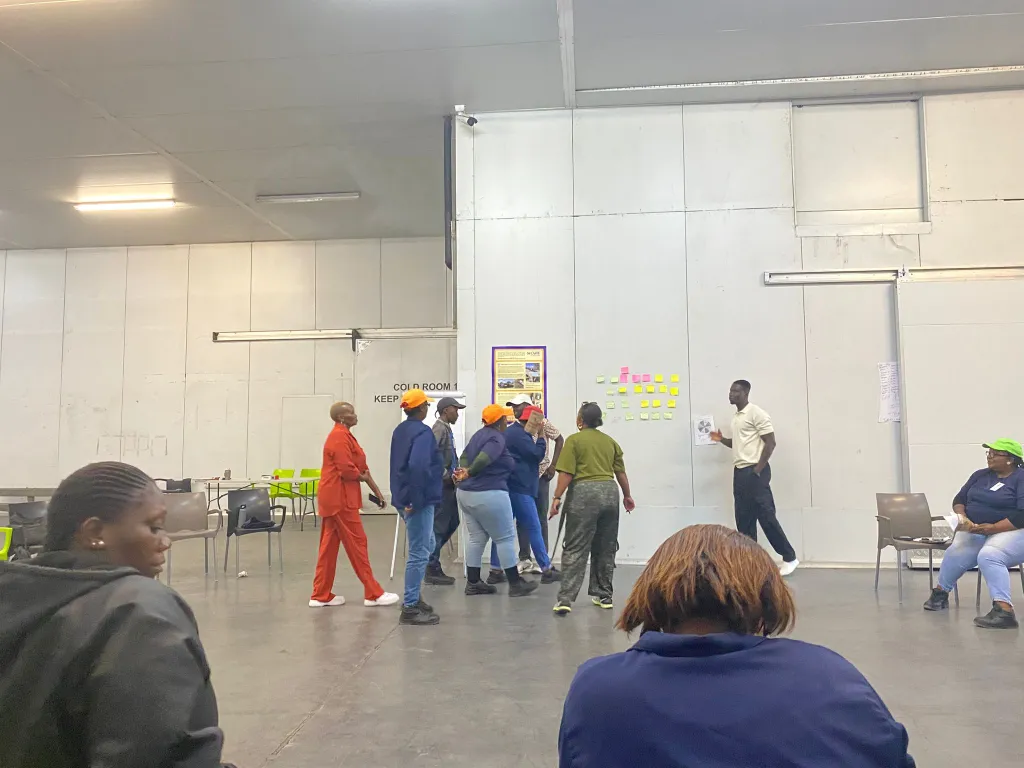
Facilitator Assistant Kaden Koopman introduced the Human Rights Squares, a 16-block exercise designed to assess participants’ baseline understanding of human rights. Through this activity, participants explored core human rights principles, the categories of rights, and the national, regional, and international instruments that govern them. The activity generated lively discussion and highlighted both shared understanding and areas that required more attention.
Group Work: Exploring Human Rights Themes
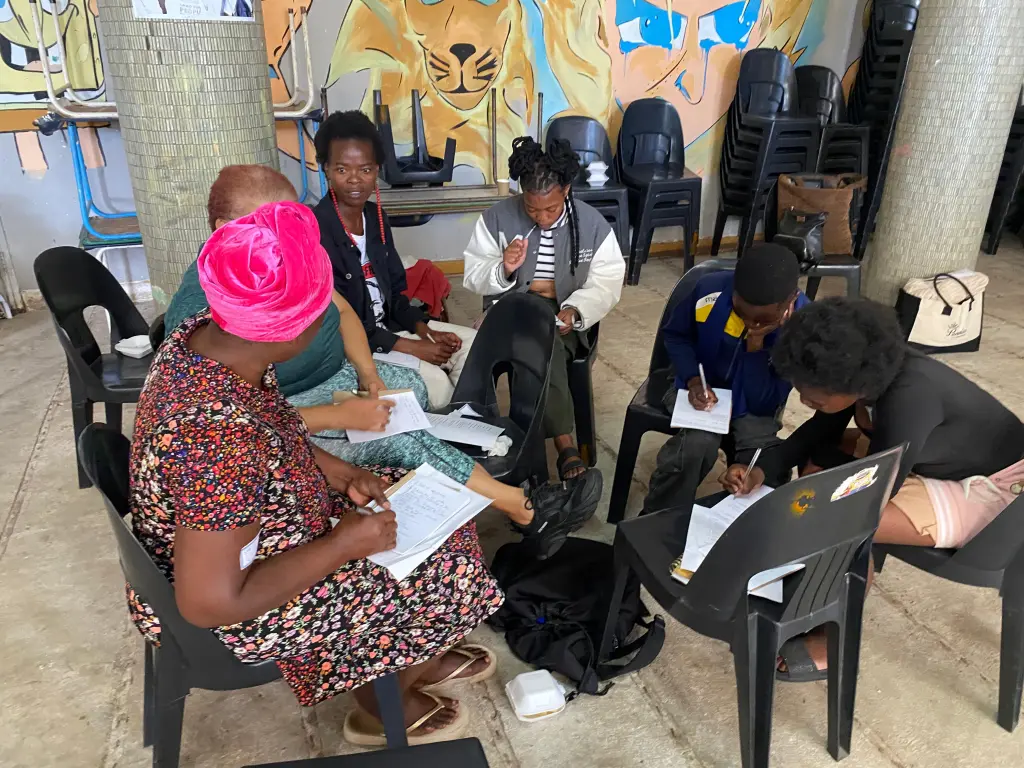
Participants were divided into four groups named after African countries—Burkina Faso, Botswana, the Kingdom of Eswatini, and Ethiopia. Each group received a set of articles focusing on different human rights themes: Human Rights Principles, The Importance of Human Rights Education, Building Human Rights Communities, and Foundations of Human Rights Education. Groups analysed their topics and presented their findings, sparking thoughtful engagement during the plenary. The conversations reflected both curiosity and a growing sense of empowerment.
Human Rights in Our Languages
In celebration of linguistic diversity, participants wrote the phrase “human rights” in the languages spoken in the room: isiXhosa (Amalungelo abantu), English (Human rights), French (Droits de l’homme), Sotho (Ditokelo tsa batho), and Chi (discussed verbally). This activity affirmed that human rights are universal, communicated across cultures, yet deeply rooted in our lived experiences and mother tongues.
Identifying Human Rights Issues in Philippi
Participants individually listed human rights concerns affecting their communities and presented them during a plenary session. The issues raised included high youth drug and alcohol abuse, inadequate housing and basic services, conflicts over electricity access, unemployment, school dropout rates, and the neglect of persons with disabilities. Discussions also highlighted crime, slow police response, abandoned buildings, and weak or proxy leadership structures that hinder community progress. Through a human rights lens, these issues were unpacked to reveal their implications on dignity, safety, and equality.
The facilitators closed the day by revisiting key points using participants’ flipchart inputs. They emphasized principles of dignity, respect, and the importance of understanding human rights instruments. Groups were assigned homework: to research their chosen African country and analyze one community issue by considering (a) what the issue is, (b) what can be done at community level, and (c) what larger systemic solutions are possible.
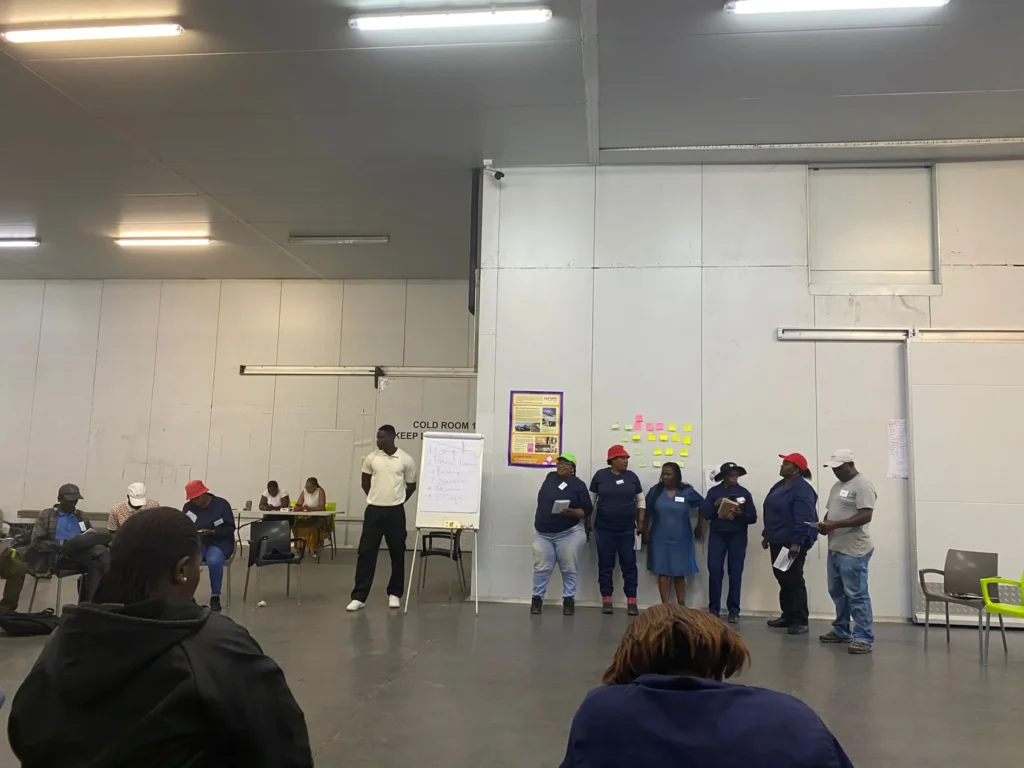
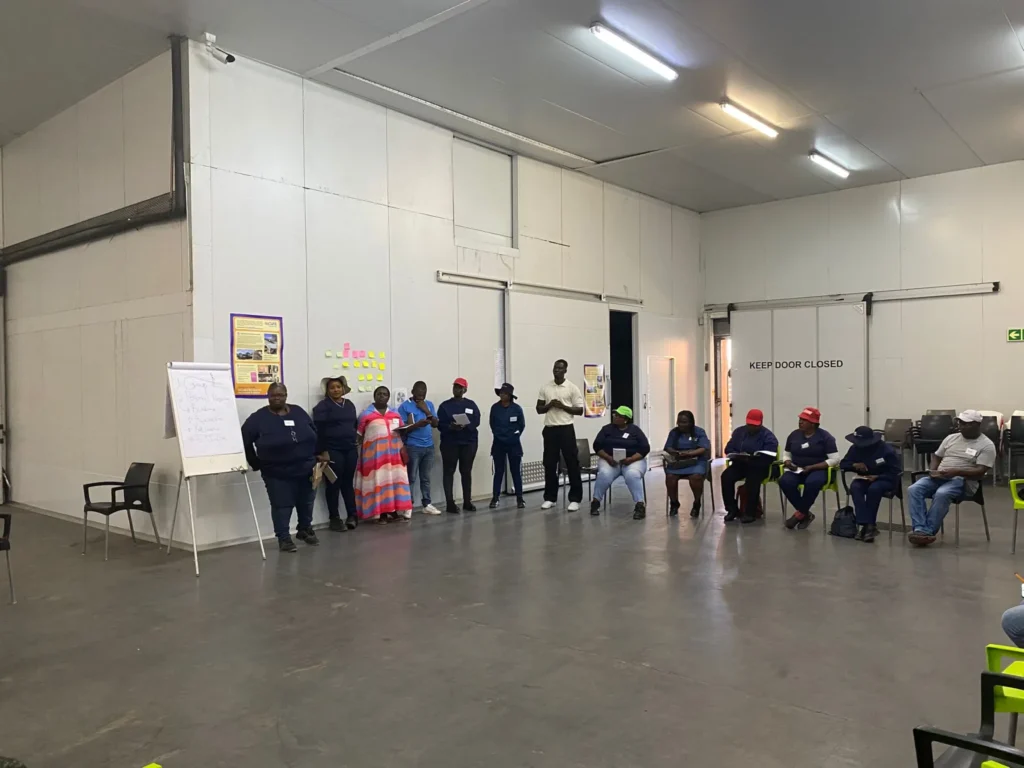
Day 2: Deepening Human Rights Understanding
The second day began with welcoming remarks and a recap of Day 1’s learnings. Facilitator Yonela Msongelwa reinforced the central idea that human rights begins with dignity and respect, and he reviewed how the issues identified relate to human rights frameworks.
Icebreaker and Group Discussions
After the recap, Kaden Koopman led an energizing icebreaker session and divided participants into new groups to discuss key themes: categories of human rights, government responsibilities, and limitations on human rights. The discussions clarified constitutional principles and encouraged participants to reflect on how rights operate in daily community life.
Each group presented their research on their selected African country. Presentations covered the countries’ historical backgrounds, cultural heritage, socio-economic challenges, and current affairs. This broadened participants’ understanding of Africa’s diversity and allowed them to draw parallels between continental challenges and those faced in Philippi.
Migration, Mobillity and Asylum Seeker and Refugee Protection Exercises
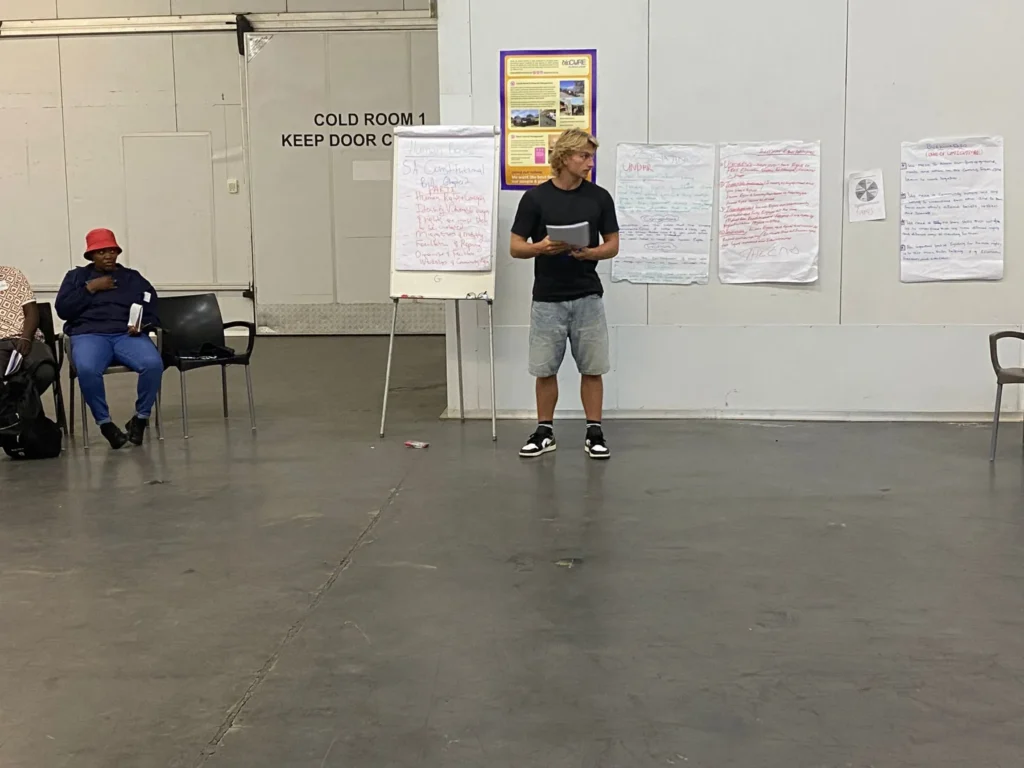
Facilitator Mahe Bodot guided the participants through experiential exercises to deepen empathy and understanding of displacement. Participants imagined fleeing danger with only five items they could carry. This emotional simulation illuminated the uncertainty refugees face and the difficult choices involved when safety is at stake.
Mahe presented key protection terms on a flipchart, including asylum-seeker, refugee, UN and OAU Conventions, non-refoulement, internally displaced persons (IDPs), resettlement, repatriation, integration, and durable solutions. Participants discussed and defined these terms together, building shared understanding of refugee protection frameworks.

BURNING ISSUES IDENTIFIED BY PARTICIPANTS
Crime and Safety
Participants highlighted the prevalence of crime in their communities; particularly gang-related violence, gun crime, and extortion, which has created a pervasive sense of fear and insecurity. These safety challenges not only threaten lives but also limit opportunities for youth and community members to engage in productive activities, restricting social cohesion and overall community development.
Infrastructure and Basic Services
Many participants reported inadequate infrastructure and poorly maintained basic services. Roads are often damaged and full of potholes, streetlights are broken, drainage systems are blocked, and the electricity supply is inconsistent. These deficiencies hinder daily life, contribute to accidents and health risks, and reduce the functionality of essential services. Informal settlements face compounded challenges, including conflicts over electricity access and overcrowded or substandard housing conditions.
Youth and Education
High school dropout rates remain a major concern, alongside a lack of motivation, limited access to educational resources such as libraries, and insufficient youth programs. Participants noted that many young people are disengaged from constructive activities and often lack guidance, contributing to cycles of inactivity, low skills development, and vulnerability to crime and substance abuse.
Health and Social Issues
Substance abuse, including drugs and alcohol, is widespread among youth, creating health and social problems for the community. Clinics are often overcrowded or under-resourced, and access to mental health services or support for vulnerable populations is limited. These health challenges are compounded by poor living conditions, ultimately contributing to long-term social and economic instability.
Leadership and Governance
Participants expressed concern over the quality of local leadership, noting that many community leaders do not adequately represent the interests of their constituents. Proxy leadership and decision-making by external gatekeepers often prevent communities from participating meaningfully in decisions that affect them. This results in mistrust, disengagement, and ineffective governance, which hinders local development initiatives.
Economic Challenges
Unemployment is high, and income-generating opportunities are limited, leaving many families economically vulnerable. Business owners often face extortion by gangs, which discourages entrepreneurship and limits local economic growth. These economic hardships exacerbate poverty and contribute to social tensions within the community.
Community Values and Participation
There is a noticeable decline in respect between youth and elders, alongside low levels of civic engagement and community participation. Participants highlighted that social apathy and a lack of collective responsibility undermine community cohesion and make it difficult to mobilize residents to address shared challenges or engage in volunteer initiatives.
Environmental Concerns
Illegal dumping, poor waste management, and a general lack of environmental awareness were cited as significant issues. The accumulation of waste and pollution not only impacts health and aesthetics but also reduces community pride and participation, while exacerbating problems such as blocked drains, flooding, and the spread of disease.
Vulnerability and Marginalisation
Certain groups in the community are disproportionately affected by neglect and exclusion. Persons with disabilities often lack access to essential services and facilities, while migrants and asylum seekers face social and institutional marginalization. This marginalization limits these groups’ opportunities to participate in community life and denies them equal protection of their rights.
OUTCOMES OF THE WORKSHOP
- Participants deepened their understanding of human rights principles, categories, and instruments.
Many expressed that the workshop reminded them of knowledge they had forgotten while also
introducing new tools, frameworks, and critical insights. - Facilitators reported that participants gained confidence in their ability to engage with community issues through a human rights lens. The three sides of a story principle and problem-tree method equipped them with practical tools for navigating conflict, analyzing problems, and guiding discussions in their communities.
- Participants were able to identify and articulate key human rights issues affecting Philippi, including crime, unemployment, poor service delivery, drug abuse, school dropouts, and inequality. This created a shared understanding of the challenges that undermine dignity and safety, forming a foundation for collaborative problem-solving.
- Through exercises on conflict, refugees, and rights limitations, participants learned to assess community situations before engaging. They expressed readiness to approach challenges with clearer awareness of dynamics, root causes, and potential consequences.
- Working in groups, including African country research groups, strengthened teamwork, communication, and trust among participants. Many appreciated the opportunity to learn from one another and to build relationships across different parts of Philippi.
- Participants reflected on issues of proxy leadership and weak representation in the community. The workshop helped them examine their own leadership roles and the need for authentic, accountable leadership based on human rights principles.
- Participants shared renewed enthusiasm and a sense of purpose. Many felt empowered to return to their communities with new knowledge, ready to contribute to positive change and champion human rights-based approaches.
EVALUATION OF THE WORKSHOP – PARTICIPANT FEEDBACK
Participants reflected positively on the Human Rights for Social Cohesion workshop, noting that their
interest in the training increased as it progressed. Initially, some participants admitted they were not
particularly engaged, but as discussions unfolded around relevant community issues and practical
knowledge, they became more attentive and invested. Many participants highlighted that the workshop helped them refresh and deepen their understanding of human rights, reminding them of concepts they had previously learned but forgotten.
Several participants emphasized the practical tools and methods introduced during the workshop, such as the “three sides of a story” principle, which allows community facilitators to approach local problems objectively and understand multiple perspectives before acting. They reported that this knowledge increased their confidence in addressing community issues, including crime, youth challenges, and social disputes.
Participants felt empowered to return to their communities and create positive change, noting that the training reminded them of their responsibility to be part of the solution rather than merely
observing problems.
The facilitators received commendations for being clear, prepared, and knowledgeable, with many
participants noting that they “knew their story” and were able to convey concepts effectively. Participants appreciated the use of tools like the human rights framework and problem tree exercises, which allowed them to systematically analyse the issues in their communities and better understand the underlying causes and dynamics. This approach, they noted, would help them confront challenges with a structured and informed perspective, rather than acting unprepared.
Additionally, participants who already held leadership positions in the community acknowledged that the workshop enhanced their knowledge and offered fresh insights, particularly on teamwork, community assessment, and practical strategies for advocacy. Many expressed gratitude, noting that the workshop had a lasting impact on them, stating that they would not approach community challenges the same way as before.
Overall, participants reported feeling more confident, informed, and capable of addressing
community issues using the tools and frameworks provided during the training.
CHALLENGES OF THE WORKSHOP
The workshop achieved several strong successes, demonstrating meaningful impact on participants and reinforcing Africa Unite’s commitment to building safer and more cohesive communities.
High Levels of Participation and Engagement
- Despite initial hesitations, participants became increasingly engaged as discussions unfolded. Group work, simulations, and practical tools created an environment of curiosity, excitement, and shared learning.
Strengthened Human Rights Literacy
- Participants significantly improved their understanding of human rights, government responsibilities, vulnerable groups’ protections, and major international frameworks. Many reported that the workshop “reminded them” of forgotten knowledge and introduced new, practical insights.
Practical Skill-Building
- Tools such as the “three sides of a story” principle, the problem-tree analysis, and rights-limitation exercises equipped participants with real methods they can use in their homes, schools, and communities.
Safe Space for Dialogue and Reflection
- Participants appreciated the open, respectful environment created by the facilitators. The workshop allowed them to express community frustrations, reflect on leadership dynamics, and think critically about local issues affecting Philippi.
Teamwork and Social Cohesion
- The use of African country groups, icebreakers, and participatory exercises broke down social barriers and encouraged trust-building among participants from different parts of Philippi.
Increased Youth Motivation and Leadership Awareness
- Participants left with a renewed sense of purpose. They recognised their role in challenging harmful behaviours, promoting peace, and supporting vulnerable groups. Many expressed a desire to serve as active agents of change.
Positive Feedback for Facilitators
- Participants commended the facilitators for being knowledgeable, prepared, and relatable. The teaching methods were described as clear, engaging, and rooted in real community experiences.
SUCCESS OF THE WORKSHOP
- Time Constraints
The scope of the workshop; spanning human rights principles, migration, conflict mediation, and
the roles of Chapter 9 institutions; proved broader than the time available. As a result, several discussions felt rushed, and participants expressed a clear desire for more space to explore issues in
depth. Many indicated that extended time for reflection, dialogue, and hands-on exercises would
have strengthened their learning experience. Due to these constraints, not all planned content
could be covered. - Language Barriers
Although the majority of participants were comfortable engaging in English and isiXhosa, a few
participants encountered challenges with English terminology, particularly when dealing with
complex human rights concepts and international frameworks. This occasionally slowed the pace of
certain activities and highlighted the importance of incorporating multilingual explanations to
ensure that every participant remains fully included in the learning process.
RECOMMENDATIONS
- Participants expressed the need for ongoing workshops to reinforce and expand human rights
- understanding. Regular sessions would sustain momentum, deepen knowledge, and help integrate
- human rights into daily community life.
- Facilitators should consider hosting focused dialogues on the issues identified, such as: Crime and safety, School dropout rates, Electricity challenges, Unemployment, And Drug and alcohol abuse
- These dialogues should target youth and community leadership structures.
- Given the high rates of drug abuse, unemployment, and school dropouts, targeted youth programs are urgently needed. Capacity-building, mentorship, skills development, and leadership training should be prioritised.
- Partnerships with SAPS, local government, schools, and community organisations can be strengthened to address service delivery gaps, crime, and other structural challenges more effectively.
- Participants recommended: Increased police visibility and improved response time, More CCTV cameras, addressing abandoned buildings used for criminal activities, and Improved street lighting. These interventions would contribute significantly to safety and human rights protection.
- The issue of proxy leadership highlights the need for stronger, more accountable leadership. Facilitators should encourage: Leadership training, Community accountability dialogues, Structures that reflect genuine community needs
- Participants would benefit from ongoing mentorship, check-ins, and support to help them apply workshop tools in their community work. This maintains impact and ensures knowledge is translated into action.
- Given the positive feedback, extending the workshop to a broader audience may strengthen community-wide awareness of human rights and social cohesion principles.