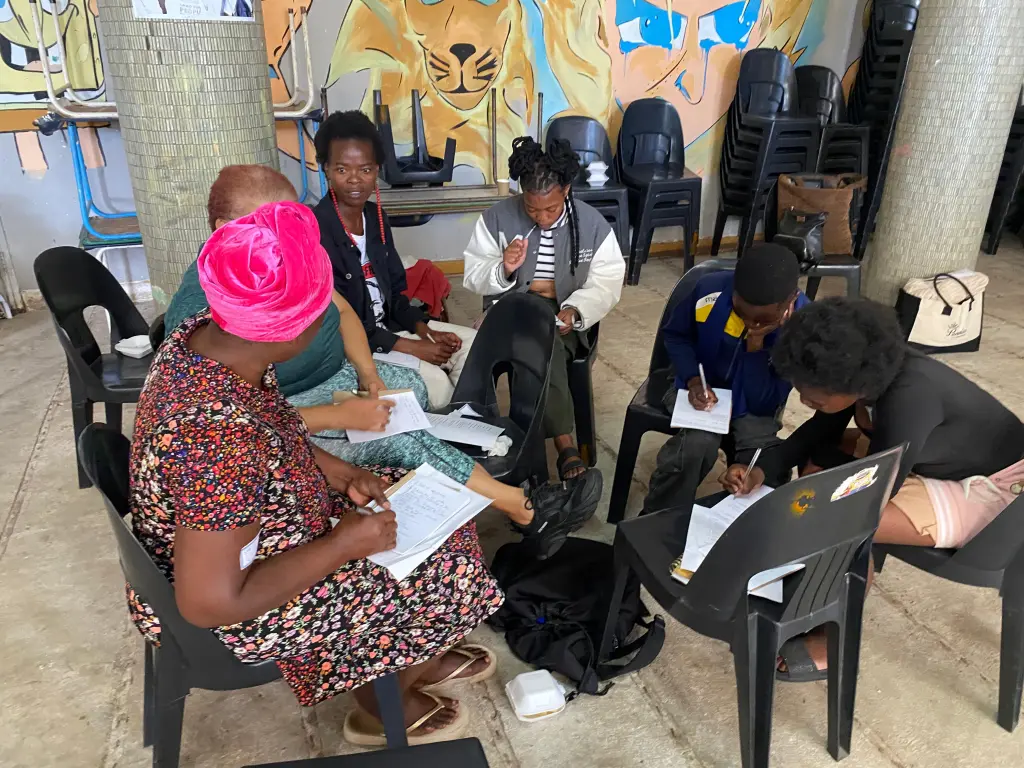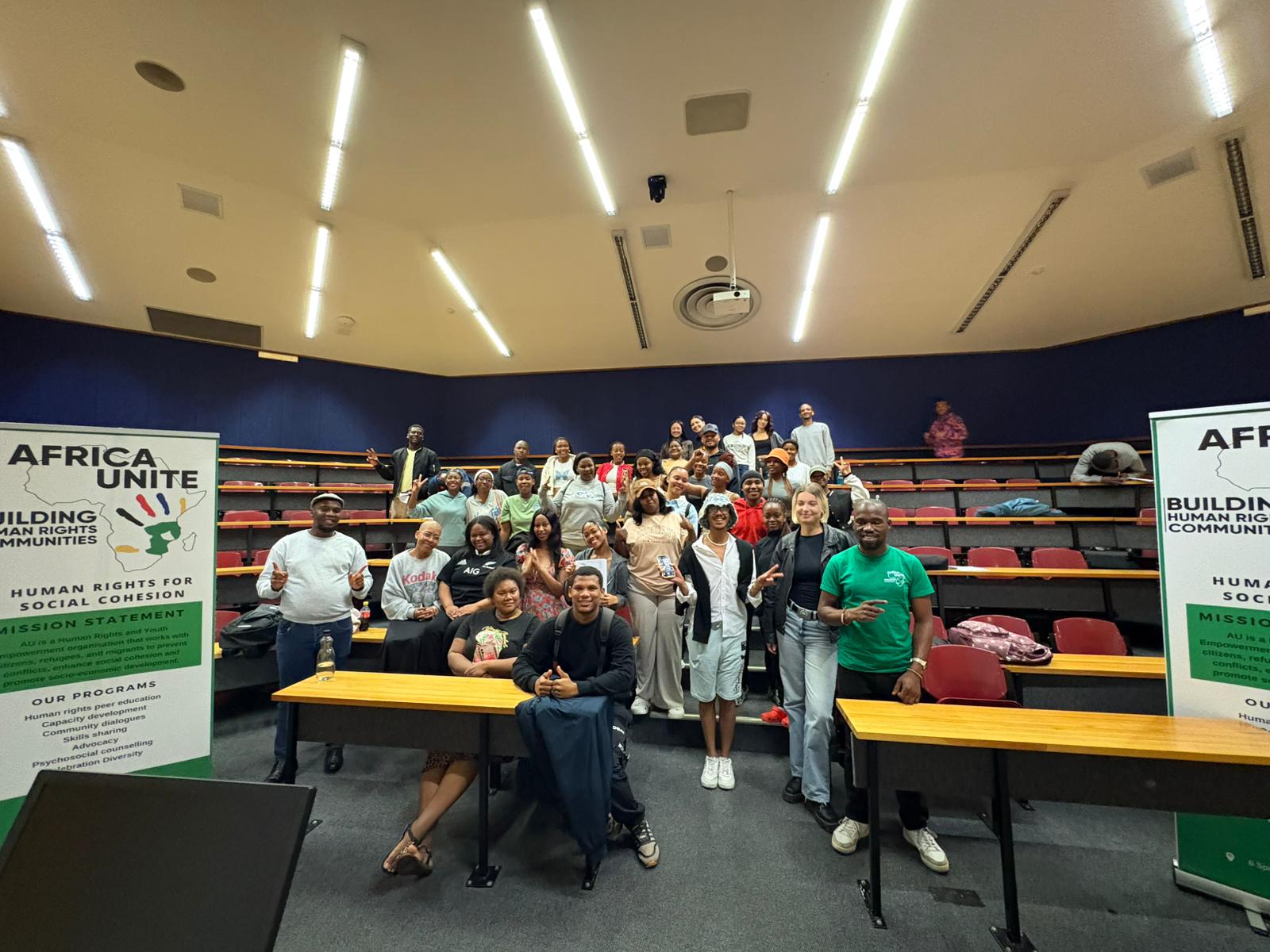
The Africa Day Now! – A Call to Be Proud of Your Africanness session, held at the University of the Western Cape (UWC) Main Campus as part of Africa Unite’s Human Rights for Social Cohesion Programme, brought together 37 Community Development students (26 female and 11 male) for an insightful dialogue on Africa’s history, liberation journey, and vision for continental unity. It aims to reconnect young people with Africa’s story, from early resistance movements and the formation of the Organisation of African Unity (OAU) in 1963 (now the African Union) to the launch of the Africa Day Now! Campaign, which calls for 25 May to be declared a National Public Holiday in South Africa as a symbol of African unity, freedom, and pride. Beyond reflecting on the past, the session sought to inspire students to embrace their African identity, engage with Africa Unite’s youth initiatives (including internships, peer education, and human rights programmes), and benefit from the partnership with UWC’s Community Development Department, which fosters ongoing collaboration and experiential learning that aligns academic growth with civic engagement and social impact


The purpose of the workshop
The purpose of the information session was to illuminate Africa’s story, particularly the formation of the Organisation of African Unity (OAU) and its forerunners, while underscoring the significance of 25 May as Africa Day. The session introduced Africa Unite’s Africa Day Now! campaign, which advocates for 25 May to be recognised as a National Public Holiday in South Africa and included a survey to gauge the knowledge levels of South Africans and other Africans regarding the continent. Additionally, the session served to introduce Africa Unite to a group of community development students at UWC, fostering opportunities for partnership and collaboration with the Community Development module management and students, to recruit them for Africa Unite’s internship, peer education, and human rights peer educator programmes.
The topics covered during the workshop
- Overview of Africa’s liberation journey and early resistance movements.
- The formation and vision of the Organisation of African Unity (OAU) as a body for continental unity and freedom.
- The role of the OAU Liberation Committee in advancing independence across Southern Africa.
- Historical background and significance of Africa Day (25 May 1963) as a symbol of unity, freedom, and African pride.
- Presentation of the Africa Day Now! Campaign, advocating for 25 May to be recognised as a National Public Holiday in South Africa.
- Introduction to Africa Unite’s vision, mission, and programmes promoting human rights, youth empowerment, and social cohesion.
- Reflection on African pride, unity, and building a shared future rooted in heritage and collaboration.


Activities of the Workshop
The workshop was opened by Mr Lindani Maphumulo, a lecturer in Community Development at the University of the Western Cape. He introduced a representative from Africa Unite, who is also a human rights peer educator, to give a presentation. The presentation for Africa Day began with the distribution of a survey questionnaires. Following this, the Africa Unite representative introduced the organisation’s work and shared an African story that highlighted the continent’s struggle for liberation and freedom. This narrative emphasised the efforts of many Africans who were resisting colonisation long before the formation of a continental body.
These liberation fighters collectively paved the way for such an organisation to be established. South Africa concluded its consultations in 1955, during which all liberation movements collaborated to create the Freedom Charter in Kliptown 1955. The presentation further discussed the role of the Organisation of African Unity and its liberation committee, which played a crucial role in the liberation of Africa, particularly in Southern Africa and South Africa. Connecting this story to that of the African continent, students learned that Africa Unite was launching a petition and campaign to lobby the government to amend the National Public Holiday Act. The goal was to add May 25 as a national public holiday. Those who supported this idea were invited to sign the petition, and many students did so.

Survey Summary of the presentation (responses from participants)
The survey reveals that participants have a solid foundation of basic knowledge about Africa, including the number of countries (≈80%) and the ability to name at least three countries (≈97%). Awareness of Africa Day improved markedly after the intervention (from ≈54% to ≈85–88%), and most participants reported familiarity with African history or freedom fighters (≈91%). Knowledge of African leaders was strongly skewed toward South African figures (≈71%), and awareness of African languages reflected a South African and European bias, indicating a tendency toward regional and colonial focal points.
Beyond factual knowledge, participants expressed strong sentiments of pride in African identity, emphasising culture, diversity, and unity. Nearly all supported greater intra-African solidarity (≈97%) and valued Africa Day as a symbol of continental identity and cohesion. However, their understanding often remains nationally or regionally centred, reflecting limited pan-African depth and awareness of leaders, languages, and historical events from across the continent. Overall, participants demonstrate both curiosity and attachment to Africa, tempered by geographically concentrated perspectives.
Burning issues during the workshop
- Many students knew little about Africa beyond South Africa.
- Awareness of African history, leaders, and liberation movements outside the country was minimal.
- This gap reflects how colonial and national narratives still dominate education and media.
- Participants questioned the current state of African unity, citing divisions, political instability, and lack of cooperation among African states.
- Some referenced ongoing conflicts (e.g., in Sudan) and asked what youth and civil society can do to promote peace and solidarity.
- Students expressed interest to learn African history and culture with the same intensity as Western or local South African subjects.
- Participants showed eagerness to get involved but highlighted a lack of clear platforms for youth participation in continental initiatives.
- Many asked how to join Africa Unite or lead similar educational activities in their own communities.
Outcomes of the workshop
- Students were informed about Africa Unite and increased their knowledge of Africa and the 25 May 1963 story and events.
- 37 participants signed the Africa Day petition and expressed interest in being part of it.
- Students can be able to link the story of South Africa to that of Africa as a whole.
Evaluation of the workshop (Comments from participants)
The students during the sessions expressed support for the Africa Day Now campaign, and as expected, knowledge level about Africa was minimal outside of South Africa. Among the students, there were those who were curious about the unity of Africa and cited what is happening in Sudan and other African countries and what could be done to aid countries in conflict. While other students were excited to learn about Africa and expressed that they would love the opportunity to learn more about the African Continent. Students expressed that they wished they had the same knowledge level as the presentation and more about Africa. Meanwhile others had the knowledge and expressed that it was relatable in the manner it was delivered.
Other students raved about Africa Unite and how they would want to be able to join the youth movement to also gain the experience and the knowledge that is expressed by the Africa Unite team. Furthermore expressed the excitement about the opportunity to get experiential learning opportunities and also eager to contriubute to the work of Africa Unite. Beyond that they also enquired on how they could be able to host such events in the schools and their respective communities. The students and the lecturer both were and are excited as we are about the potential outcomes of these engagements and collaborative partnership between the faculty or module and Africa Unite.

SUCCESS OF THE WORKSHOP
- The students received a presentation of Africa Day of which they welcomed and liked for their studies.
- The students were able to complete a survey about their knowledge and information about Africa.
RECOMMENDATIONS
- Africa Unite should develop a University and Tertiary Education-Focused Programme aimed at equipping young people with essential knowledge and values before they transition into adulthood. This initiative would ensure that students are well-informed, socially conscious, and empowered to become active citizens who uphold respect, dignity, and human rights. By extending its Human Rights and Social Cohesion work into higher education institutions, Africa Unite can strengthen a generation of youth who are prepared to contribute meaningfully to community development and the broader vision of a united and just Africa.
- Conduct a national survey and review of African knowledge and perceptions among South Africans to identify key educational gaps.
- Strengthen collaboration between Africa Unite and tertiary institutions to promote African heritage, unity, and civic awareness.
- Expand outreach to create more youth participation platforms and mentorship programmes under Africa Unite’s initiatives.
- Develop follow-up sessions and community projects led by students to extend the Africa Day Now! Campaign beyond campuses.