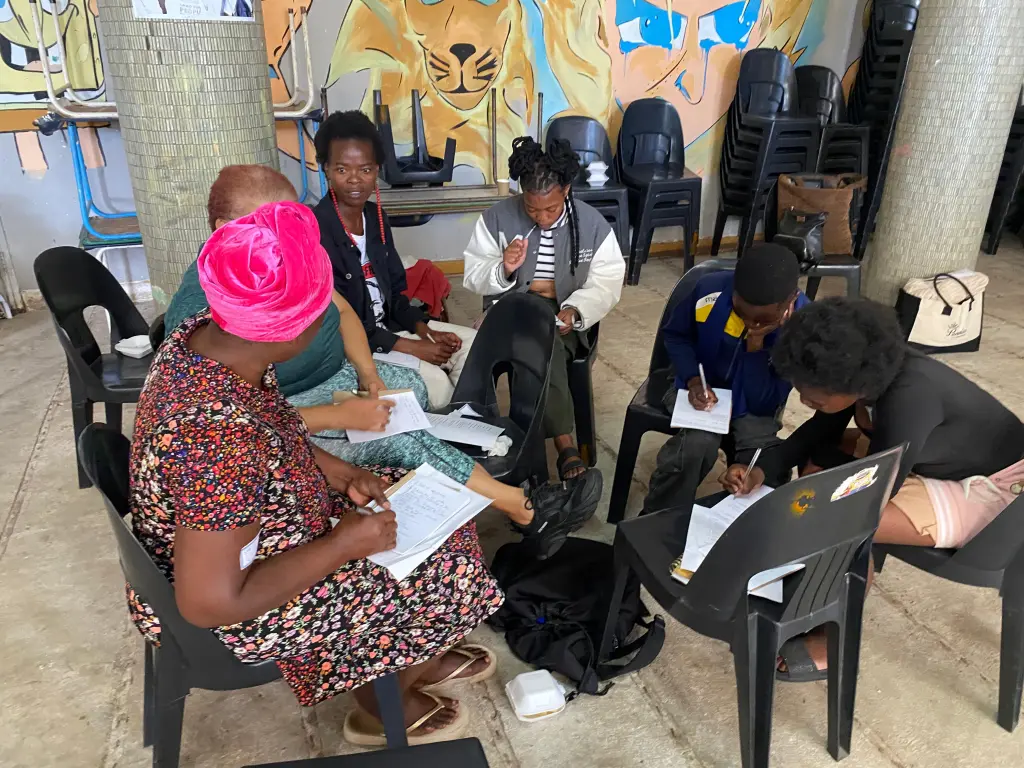
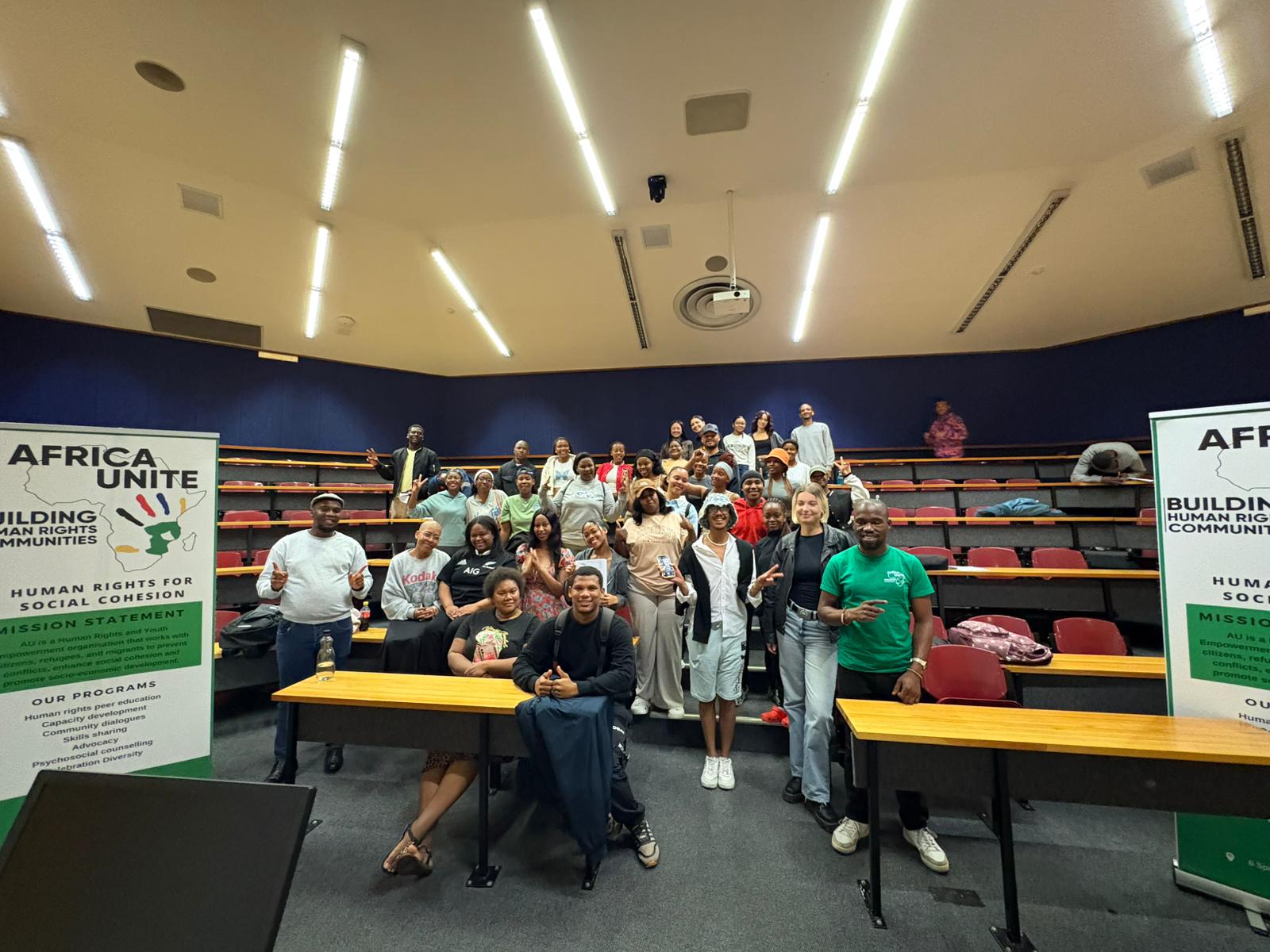
The purpose of the workshop
This workshop was designed to empower Africa Unite’s human rights peer educators by strengthening their ability to meaningfully engage with local government leaders, including ward councillors and other key officials. Through a comprehensive exploration of local government structures, functions, and avenues for collaboration, peer educators gained the knowledge and skills necessary to effectively partner with local authorities. This foundation enabled them to better advocate for community-driven initiatives and leverage human rights principles, in order to foster social cohesion and create pathways for upward social mobility.
The Topics Covered During the Workshop
The “Democracy and Governance Workshop: How Local Government Works” explored a wide range of key themes designed to enhance participants’ understanding of how local governance operates and how citizens can actively engage in these processes. The following topics were covered:
- Overview of Local Government: Roles and Responsibilities
Introducing participants to the basic principles of local governance, including how municipalities function as the sphere of government closest to the people.
- Structure of Municipalities and Municipal Services
Explaining how municipalities are organised, their departments, and the services they are mandated to provide, such as water, sanitation, waste management, and community development.
- Expectations and Rights within Municipalities
Highlighting the rights and responsibilities of citizens in relation to local government, and how residents can hold municipalities accountable for service delivery.
- Role and Accountability of Municipal Councillors
Outlining the duties of ward councillors as community representatives and their role in ensuring transparency, communication, and responsiveness between the municipality and the public.
- Functions of Ward Committees
Discussing how ward committees serve as advisory structures to the council and as vital communication links between communities and local government.
- Municipal Budgeting and Public Spending
Providing insight into how the municipal budgeting process works, including the development of the Integrated Development Plan (IDP) and the importance of community input in determining priorities and allocating resources.
- Rules and Procedures for Local Government Contracts
Examining how procurement and service contracts are managed within municipalities to ensure fairness, accountability, and compliance with regulations.
- Public Participation in Municipal Processes
Emphasizing the importance of civic involvement in meetings, consultations, and decision-making platforms, and how citizens can influence policy and planning at local level.
- Becoming a Responsive and Active Citizen
Encouraging participants to move from passive observation to active engagement, taking ownership of their role in governance, and working collaboratively with leaders and institutions to advance community development.
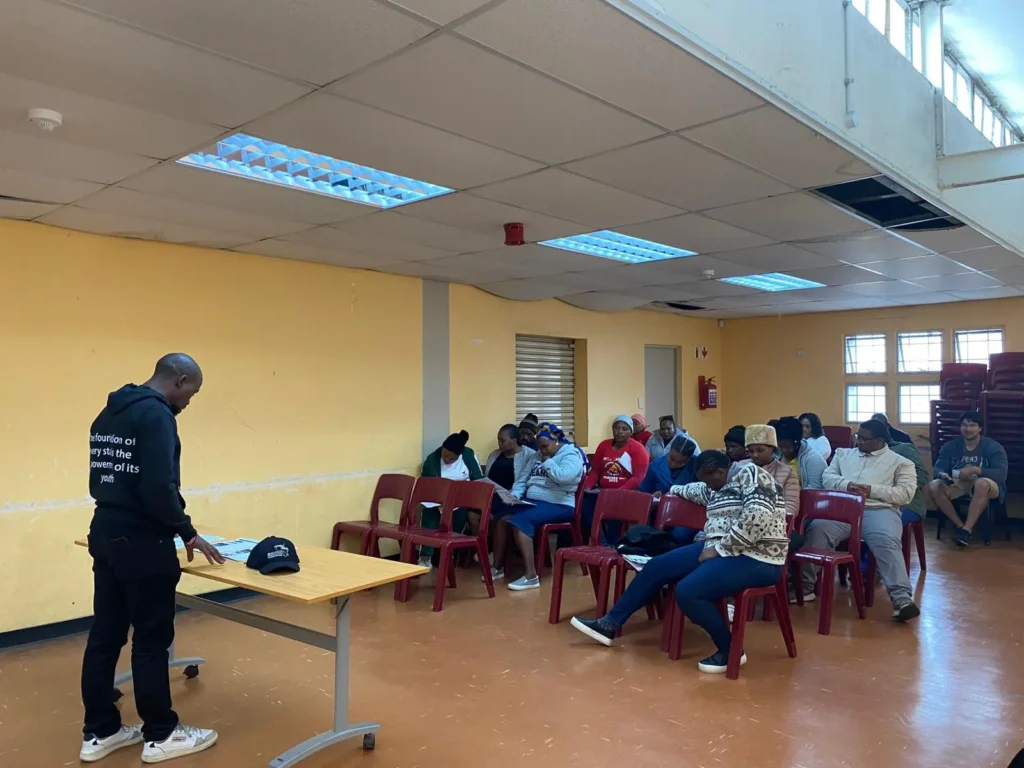
The Activities of the Workshop
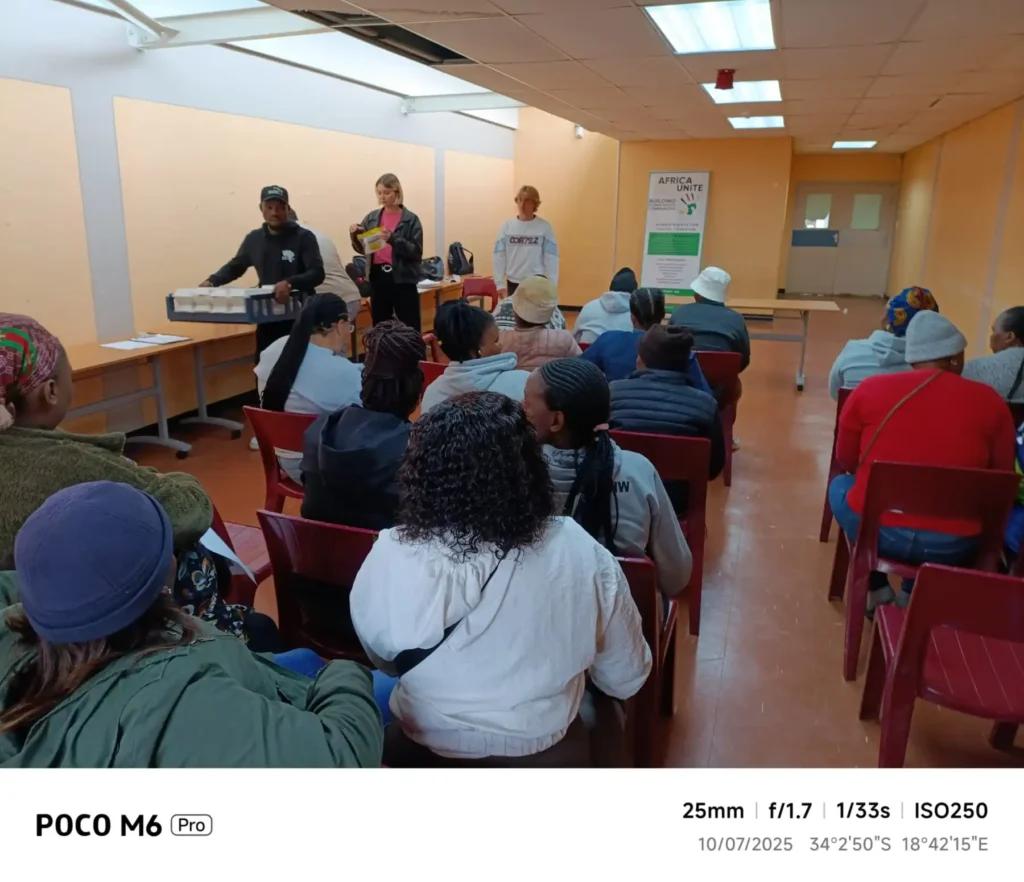
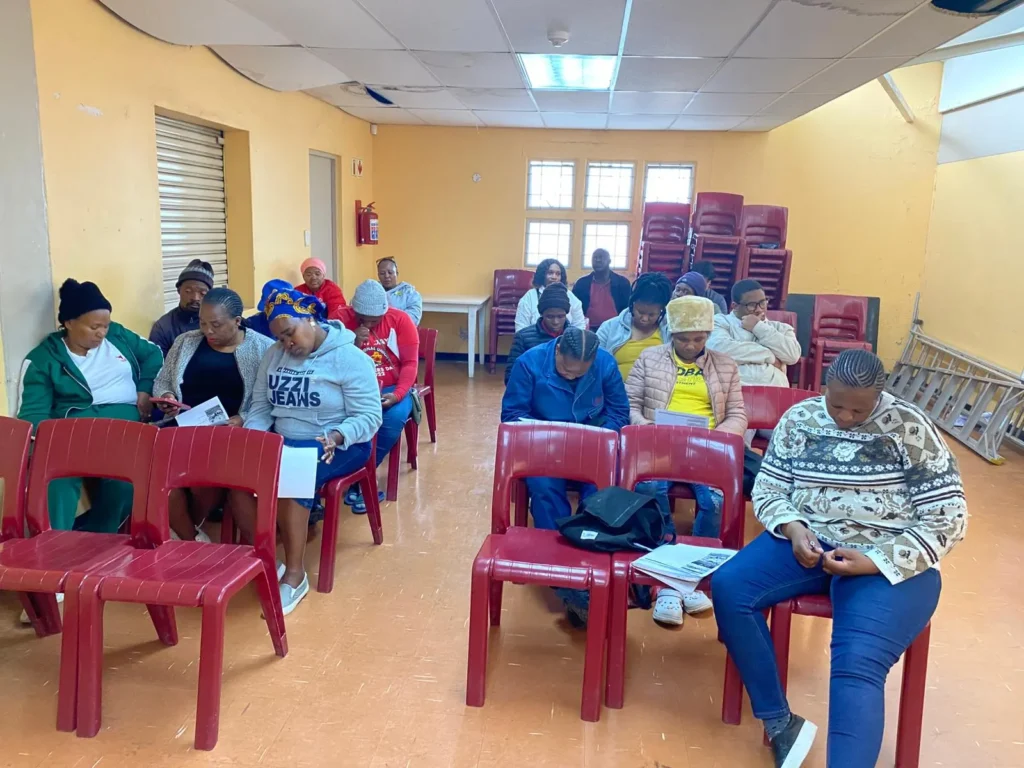
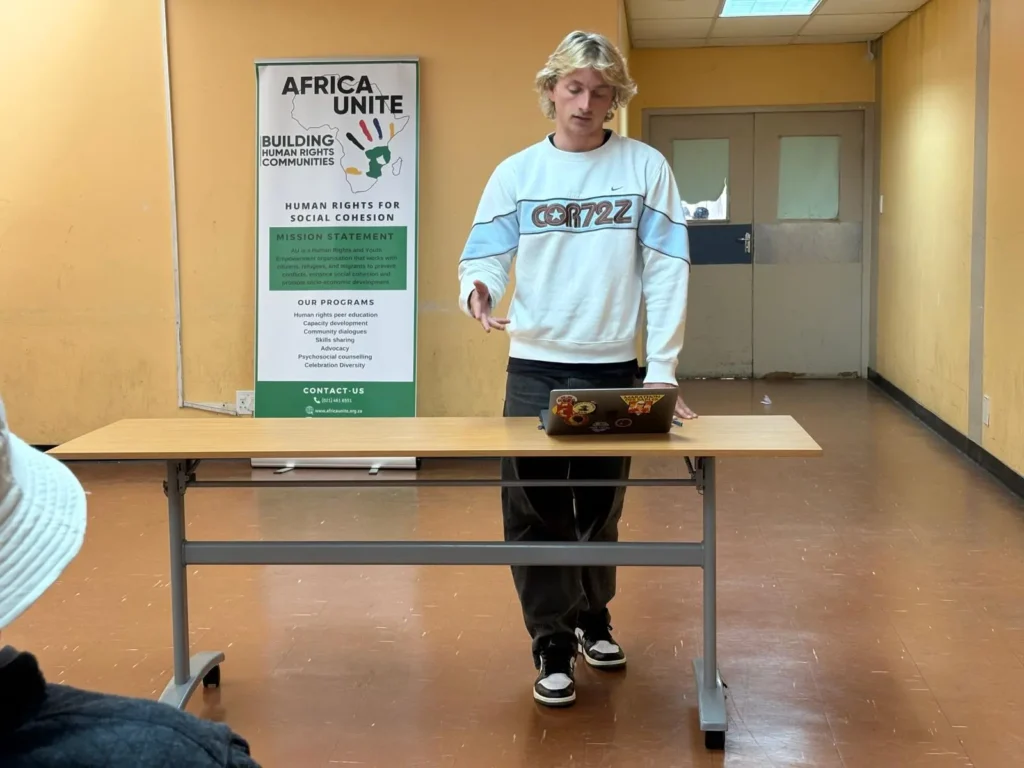
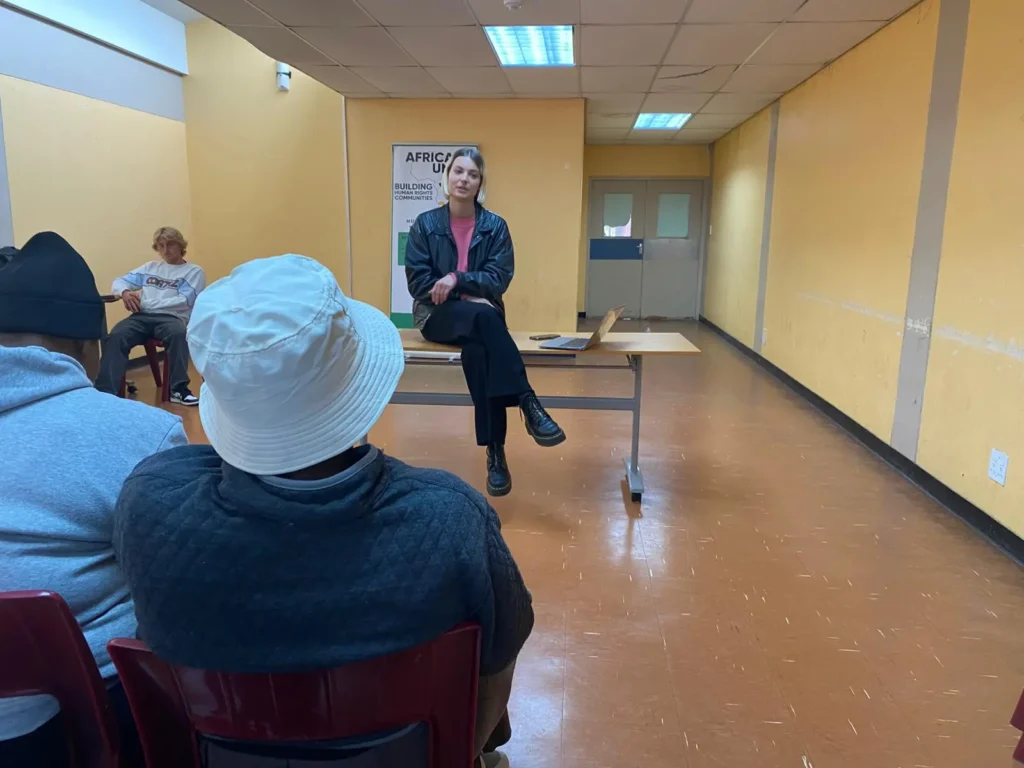
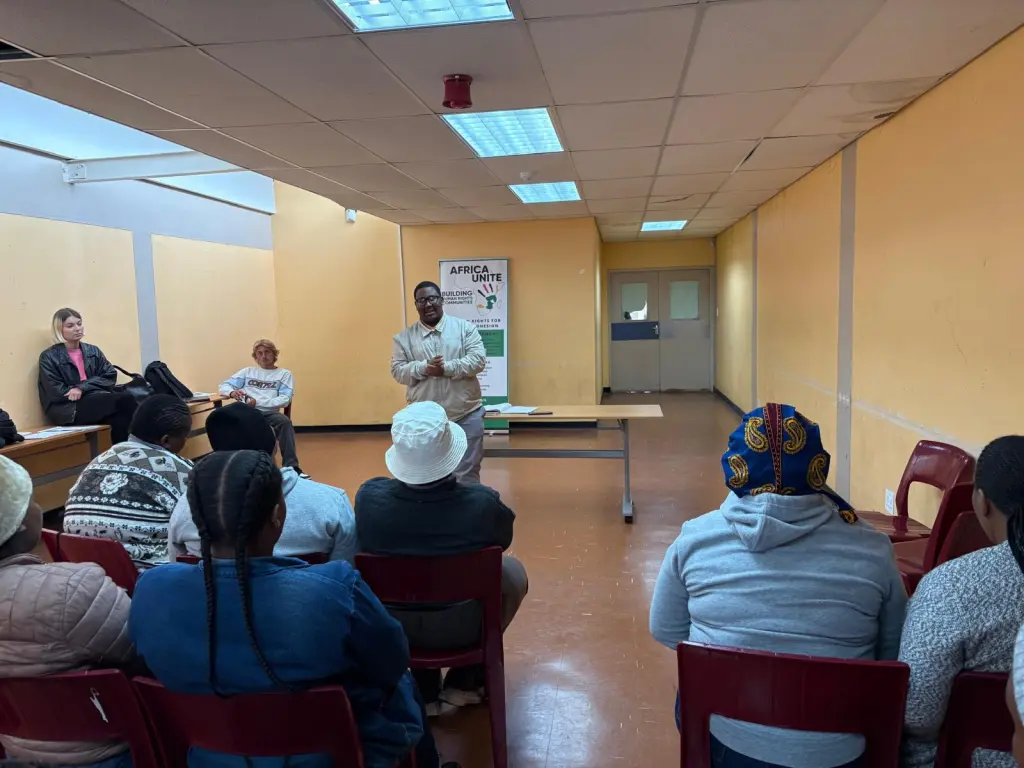
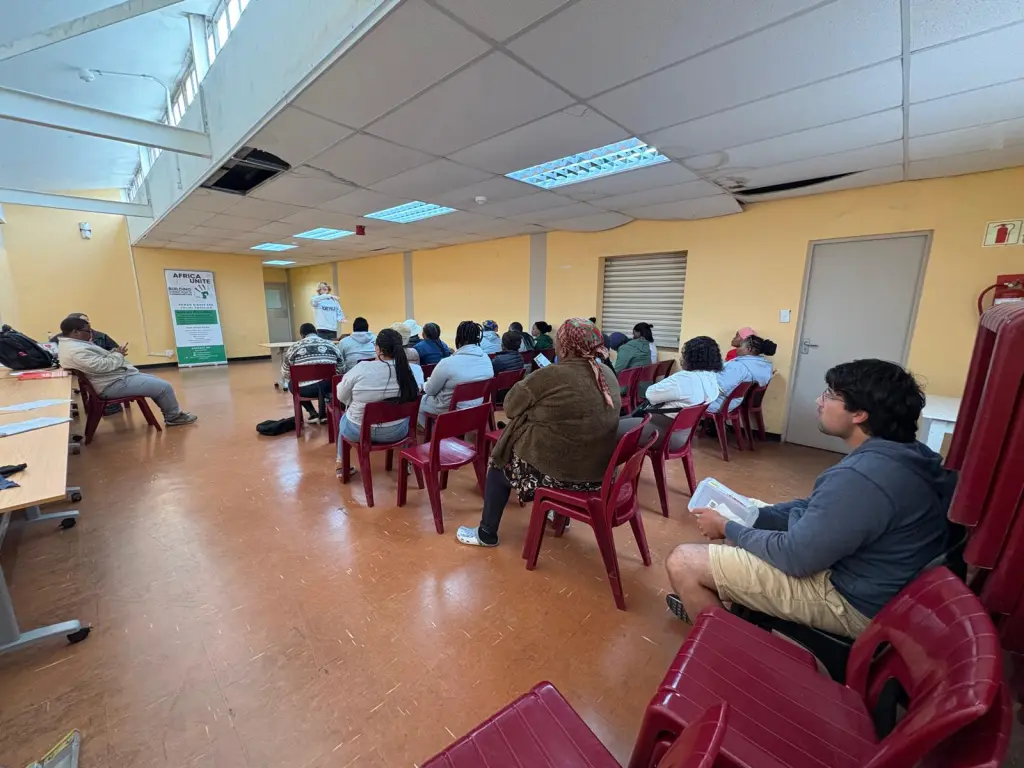
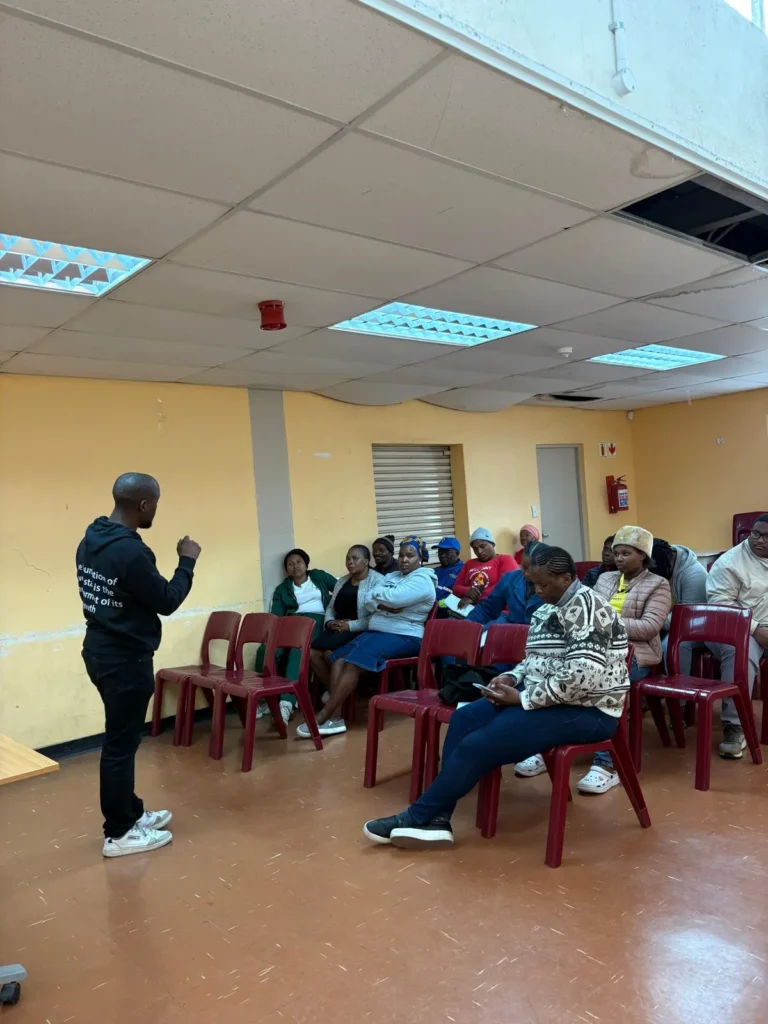
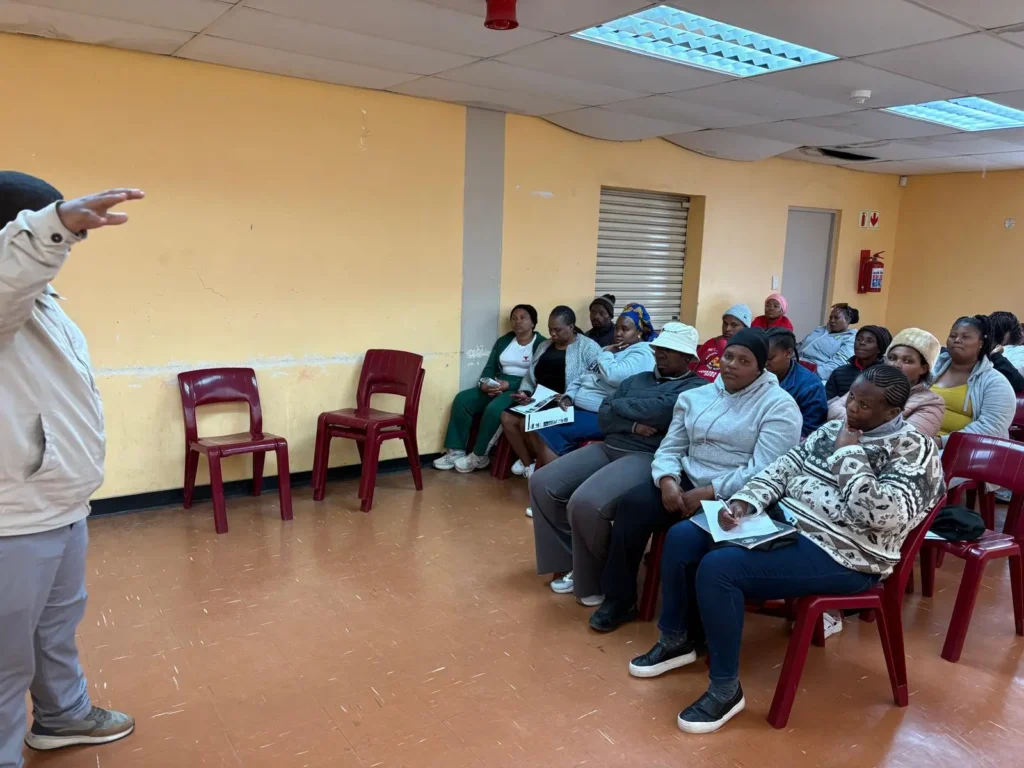
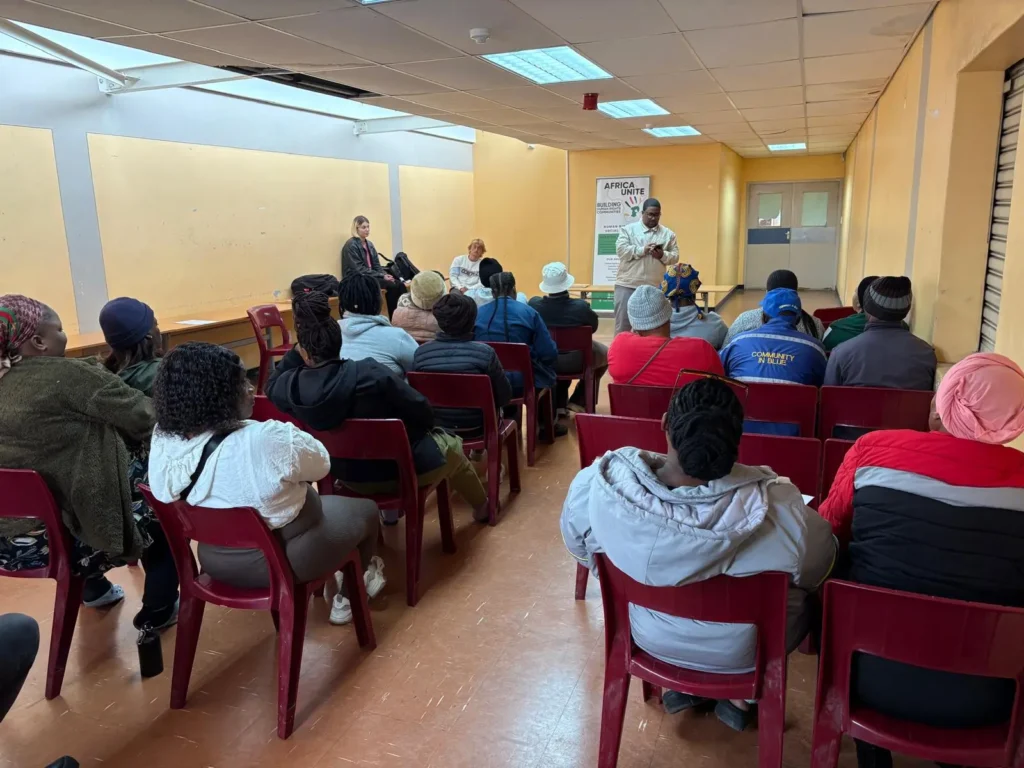
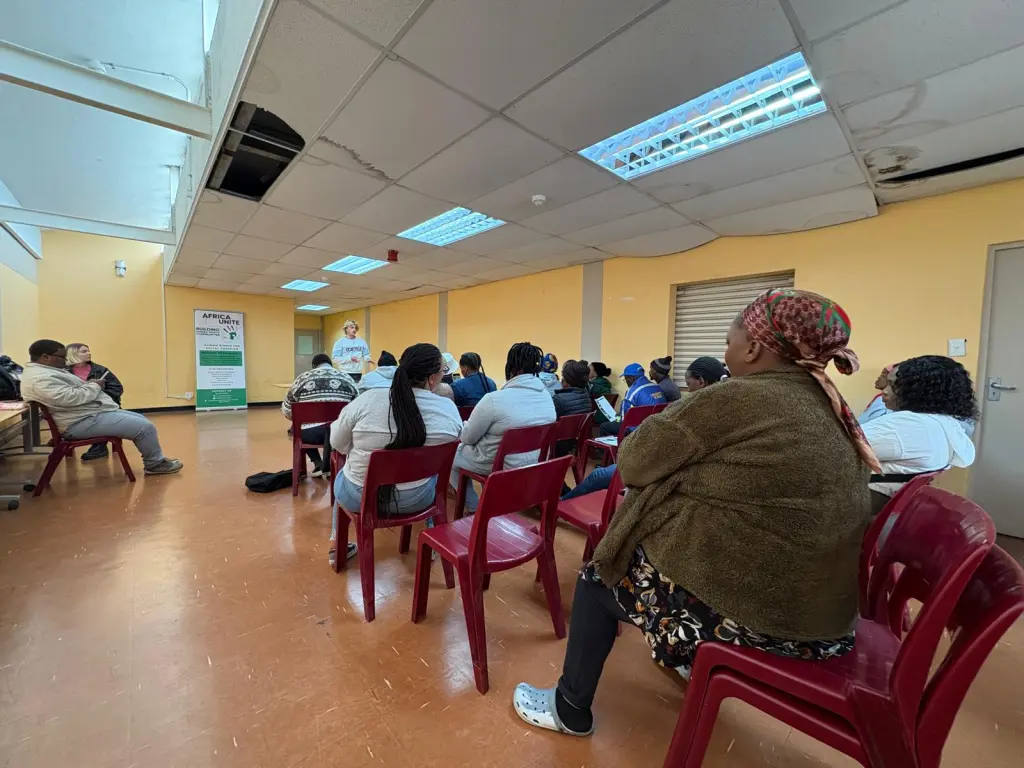
The workshop was an interactive and informative session that allowed participants to engage directly with key concepts of governance and civic participation. It was facilitated by Yonela Msongelwa, with Mahe Bodot, Juli Schwoch, and Kaden Koopman serving as co-facilitators. 24 Community members attended, including several local leaders and the Nezeema Isaacs Public Library in Makhaza, Khayelitsha. Each facilitator covered specific topics related to the structure and functioning of local government, ensuring that participants gained a comprehensive understanding of the subject.
Spheres and Separation of Powers
The session opened with Yonela Msongelwa, who welcomed participants and outlined the purpose of the workshop being to empower citizens with knowledge about how local government operates and how they can meaningfully engage with it. Msongelwa then explained the nature and character of government, providing an overview of how governance functions at different levels. He elaborated on the three spheres of government: national, provincial, and local, and the principle of separation of powers between the legislative, executive, and judicial branches. While participants were generally familiar with the concept of government, many had a limited understanding of the constitutional principles that define the relationship and cooperation between the spheres, or how these divisions are intended to maintain accountability and prevent abuse of power.
Local Government: Structure, Roles, and Accountability
The next session was facilitated by Kaden Koopman, who provided a basic overview of local government. He explained the structure of municipalities, their functions, and how they deliver services that directly affect citizens’ daily lives. Koopman also discussed the roles and accountability of municipal councillors, emphasising that councillors are the key link between the municipality and the community. He further explored the functions of ward committees, describing how these structures act as advisory bodies that ensure residents’ concerns and priorities are communicated to the municipal council. His presentation helped participants understand the importance of engaging with ward committees and holding councillors accountable for service delivery and development outcomes.

Municipal Budgeting and Governance Processes
Following Koopman’s session, Juli Schwoch led a presentation on municipal budgeting and public spending, as well as the rules and procedures for local government contracts. Schwoch explained how municipal budgets are developed through the Integrated Development Plan (IDP) and how public consultation plays a key role in shaping budget priorities. Participants gained insight into how funds are allocated, how municipalities decide on projects, and how oversight mechanisms are meant to ensure transparency in financial management.
She also highlighted the importance of understanding procurement procedures, stressing that transparency and accountability in local government contracting are essential to prevent corruption and ensure equitable service delivery.
Municipal Services, Expectations, and Public Participation
The final session was facilitated by Mahe Bodot, who focused on municipal services, expectations, and public participation. He invited participants to share their knowledge and experiences of the services they receive from the municipality. Participants were quick to name essential services such as water supply, electricity, refuse removal, sanitation, and housing. Bodot then guided the discussion toward citizen expectations and rights within municipalities, highlighting how communities can participate in shaping and monitoring these services. He emphasized that participation goes beyond attending meetings, involving the need to be informed, vocal, and proactive in local governance. His session concluded by encouraging participants to view themselves as partners and co-creators in municipal service delivery, ensuring that development is community-driven and inclusive.
Burning Issues Raised During the Workshop
The workshop highlighted several major barriers that limit residents’ ability to engage effectively with local government in Khayelitsha. Many participants lacked a basic understanding of how the three spheres of government operate and how powers are separated between them. This knowledge gap makes it difficult for residents to navigate municipal systems and understand which institutions are responsible for specific services or decisions.
Although most participants knew their ward and councillor, few were familiar with ward forum members or their functions. This limited awareness reduces opportunities for meaningful participation in governance processes. Participants noted that while some councillors are visible and accessible, others deliberately avoid collaboration with informed and active community members. In some cases, proactive residents are discredited to protect political interests, eroding public trust and discouraging civic involvement.
Another key challenge was uncertainty around how and where to report corruption or maladministration. While the workshop helped clarify official reporting channels, participants still expressed fears of exposure and retaliation. Many residents also felt that their voices carry little weight, as community inputs are often ignored in decision-making. Low attendance at public meetings and limited engagement in Integrated Development Plan (IDP) consultations were seen as symptoms of this widespread disengagement. Concerns about personal safety, especially due to high crime rates and gang activity, further discourage active participation.
The complexity of government communication also poses a barrier. Bureaucratic language, excessive use of acronyms, and technical policy or budget documents make it difficult for residents to follow municipal processes. This lack of accessible information limits both transparency and community oversight. Participants further observed that local governance structures, including ward and street committees and SANCO representatives, are often dominated by individuals prioritising political agendas over community needs. This undermines development initiatives and weakens trust in leadership. Youth, women, and other vulnerable groups reported feeling excluded from decision-making, resulting in a lack of diversity in community representation.
Finally, several participants pointed to capacity gaps among some ward councillors and municipal officials, particularly in areas such as governance, community engagement, and project management. These skills shortages hinder effective service delivery and responsiveness to community priorities. Participants recommended using visual aids, interactive sessions, and practical examples to make governance concepts easier to grasp. Facilitators emphasised that such training should target not only residents but also street committees and local leadership structures to strengthen civic capacity and promote accountable, inclusive governance.

Outcomes of the workshop
Through the facilitation and interactive sessions, participants gained both theoretical and practical insights into the functioning of municipalities and their own roles as active citizens. The outcomes can be summarised as follows:
- Over 20 participants reported a clearer understanding of how local government operates, including its structures, functions, and responsibilities. They were able to distinguish between the three spheres of government and understand how power and accountability are distributed.
- Participants expressed that they now better understand their rights as citizens and how they can exercise those rights to demand accountability and improved service delivery from municipal officials and councillors.
- Participants gained confidence in engaging with local government through ward committees, public meetings, and Integrated Development Plan (IDP) consultations. They recognised the importance of civic involvement in shaping community priorities.
- Participants acquired a basic understanding of how municipal budgets are developed and allocated, and how they can monitor spending to ensure transparency and fairness.
- Several participants noted that they were previously unaware of how to report corruption or maladministration within the municipality. They now feel better equipped to identify appropriate channels for reporting while also emphasising the need for protection and confidentiality when whistleblowing
- The dialogue highlighted the need for stronger partnerships between community leaders, councillors, and residents. Participants recognised that effective governance requires collaboration, mutual respect, and open communication between leaders and the people they serve.
- Many participants expressed interest in further civic education workshops and suggested that similar initiatives be extended to street committees, youth forums, and other community structures. They also recommended the inclusion of ward councillors and officials in future dialogues to promote shared understanding and responsiveness.
Evaluation of the workshop (Comments from participants)
Participants previously lacked knowledge about how to report corruption or mismanagement and expressed appreciation for learning where and how to do so during the workshop. However, many still voiced concerns about possible exposure or retaliation if they reported misconduct.
Several participants suggested that future engagements of this nature would be more impactful if ward councillors also participated. Their involvement would help ensure that community recommendations are heard directly and that councillors are better equipped with practical tools to respond to residents’ development and service delivery needs.
Participants further noted that the use of visual aids and more interactive, hands-on sessions would enhance their understanding of complex governance concepts. They also raised concerns that some local government officials struggle to collaborate with development practitioners, often perceiving them as competitors rather than partners. This attitude, participants observed, can lead to alienation and missed opportunities for inclusive community development.
Finally, participants emphasized the need for training and capacity-building workshops for municipal officials and ward councillors to strengthen their confidence and effectiveness in their roles. Community members also reported a new understanding that municipal funding for water and sanitation services is drawn partly from national income and SARS tax revenue. This insight, they explained, empowers them to assert their right to quality public services and to reject the perception that these services are provided as a favour rather than as a return on their contributions as taxpayers.
CHALLENGES OF THE WORKSHOP
- Limited visual aids for participants to increase the chances of knowledge penetration.
- Workshop was not as interactive as required or desired by facilitators.
SUCCESS OF THE WORKSHOP
- The target number of participants was reached.
- Facilitators facilitated learning and informative matter.
- Participants engaged with the content well.
RECOMMENDATIONS
- Africa Unite should organise dedicated sessions for councillors and municipal officials to explore strategies for better community engagement. These sessions would encourage collaboration between elected officials, residents, and community structures to improve responsiveness and developmental outcomes.
- Future workshops should incorporate visual aids, infographics, practical examples, and interactive exercises to enhance understanding of complex topics such as municipal budgeting, governance processes, and citizen rights. This approach will improve knowledge retention and empower participants to engage effectively.
- Workshops should be scaled up to include other communities across Khayelitsha and surrounding areas, ensuring that residents, youth forums, street committees, and other local structures gain access to civic education.
- Future workshops should actively invite ward councillors, municipal officials, and community leadership structures to participate. Their involvement can provide practical insights, facilitate two-way dialogue, and strengthen the partnership between communities and local government.
- Africa Unite should implement continuous civic education programs, including refresher sessions, digital resources, and peer-to-peer learning initiatives, to sustain participants’ knowledge and encourage active citizenship beyond one-off workshops.
- Street committees, SANCO representatives, and other local leadership structures should receive targeted training to enhance their understanding of local government processes, improve accountability, and reduce political manipulation in community development initiatives.
- Residents should be educated on how to safely report corruption or maladministration, including confidential channels and protective measures, to build confidence in accountability processes.
- Future initiatives should ensure inclusive participation, providing tailored sessions or support for youth, women, and other vulnerable groups to amplify their voices in local governance and development planning.
- Africa Unite should implement follow-up evaluations to assess participants’ application of knowledge, identify ongoing challenges, and measure improvements in community engagement and civic participation.