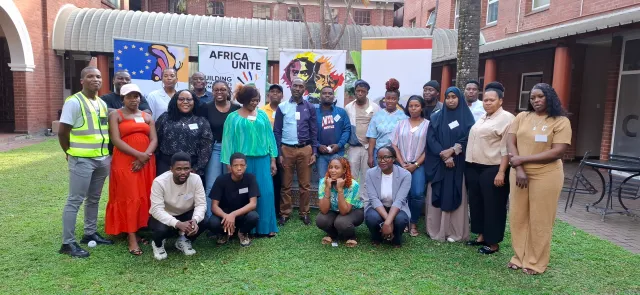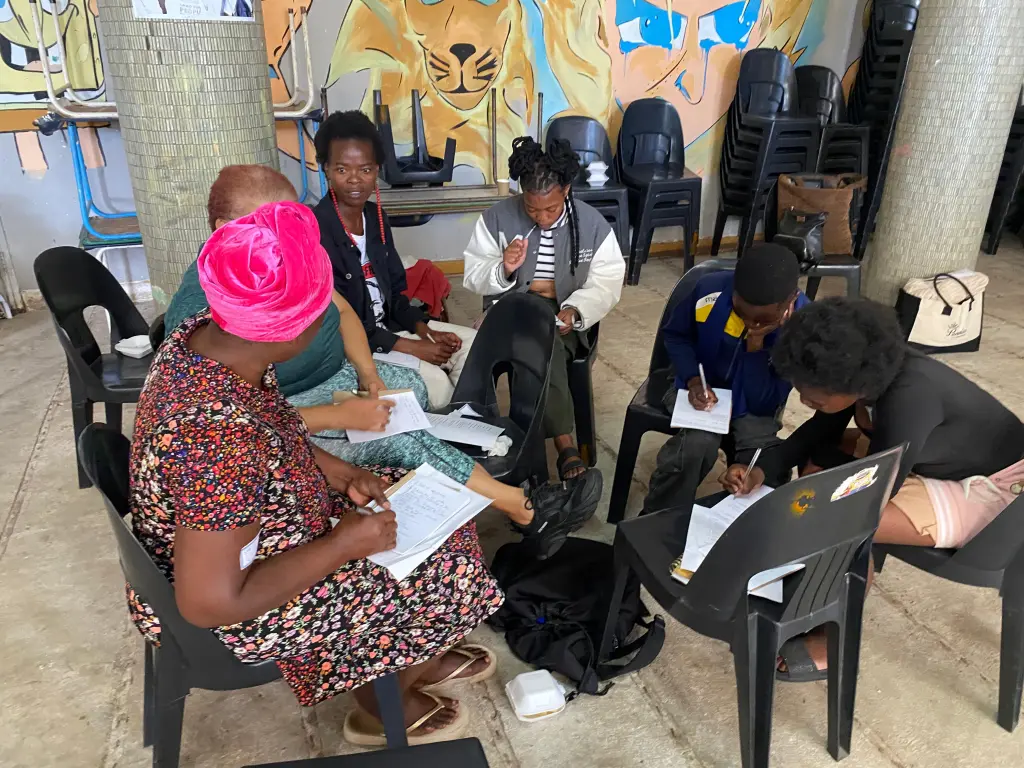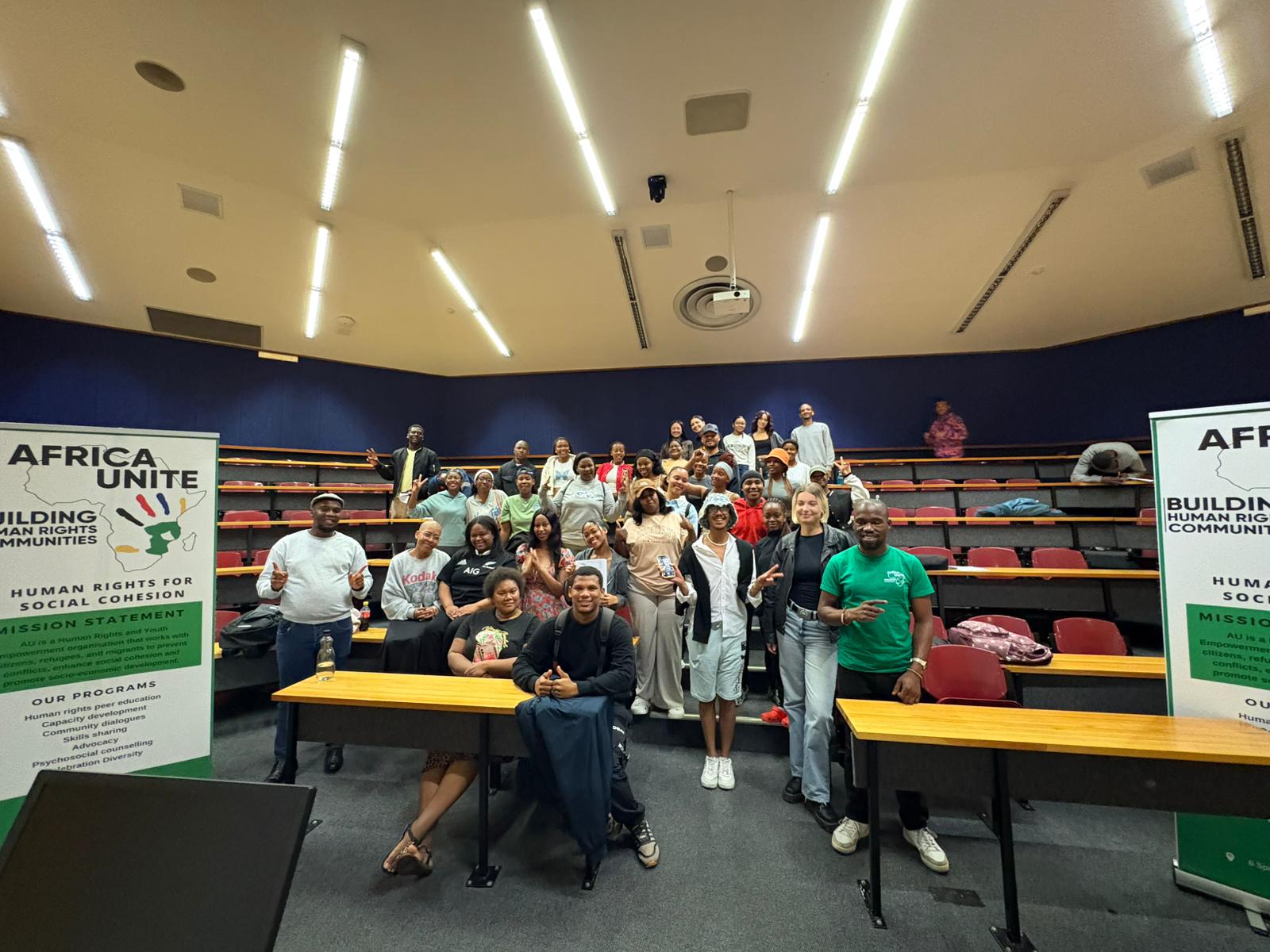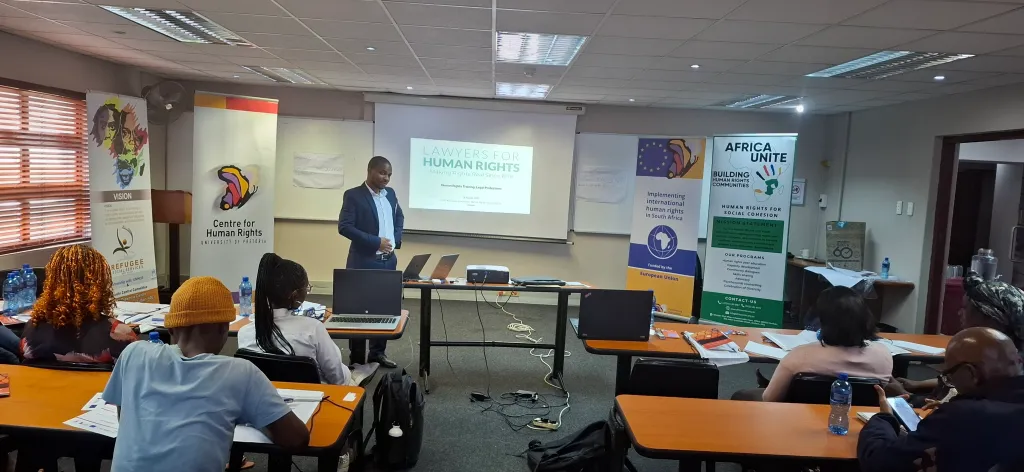
On the 18th – 19th August 2025, 28 passionate individuals gathered at the Diakonia Centre in KwaZulu-Natal for a transformative two-day Community Leadership and Human Rights Training. The event, hosted by the Centre for Human Rights (University of Pretoria) in collaboration with Africa Unite, Lawyers for Human Rights, and Refugee Social Services, was a powerful response to the growing need for grassroots leadership in addressing xenophobia, systemic discrimination, and legal uncertainty affecting migrants and refugees in South Africa.
The training blended theory with lived experience. Participants explored foundational human rights concepts and legal distinctions, such as the difference between asylum seekers and refugees, while engaging in deeply personal storytelling. Accounts of unlawful detention, bribery, and police misconduct revealed the harsh realities many foreign nationals face, despite holding valid documentation.
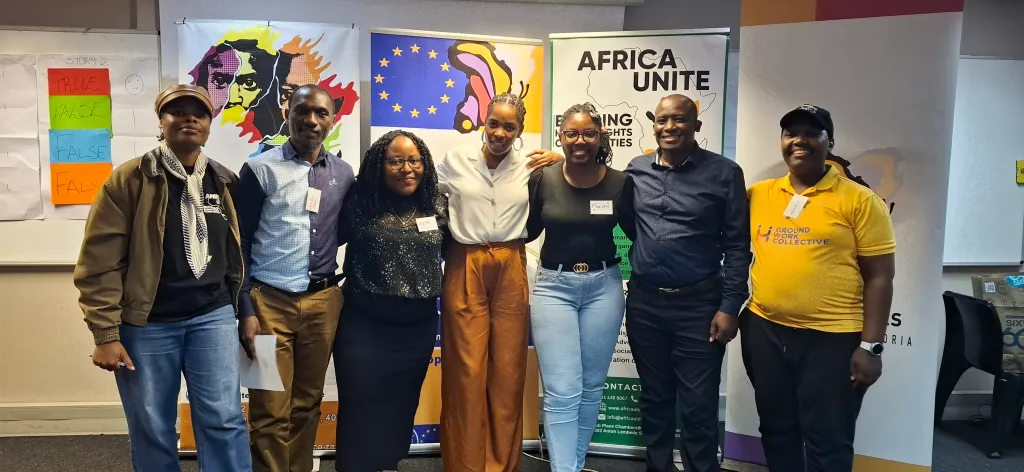
One standout session examined the 1969 OAU Refugee Convention, prompting critical reflection on why many African states have yet to fully implement its protections. This legal grounding was paired with a hands-on “Newsroom” exercise, where participants became fact-checkers, dissecting misinformation and learning how fake news fuels xenophobia. The myth of “50 million foreigners in South Africa” was debunked, and strategies for countering hate speech and disinformation were shared.
The emotional core of the training came through testimonies from migrants and refugees. A Somali entrepreneur described his shop as a prison with barred windows, locked doors, and a life lived in fear. Another participant, a Somali woman, recounted fleeing her home after witnessing the murder of her family at age 14. Her plea was simple yet profound: “South Africa must be my safe place.” These stories underscored the psychological toll of dehumanization and the bureaucratic barriers that compound vulnerability. There was a noticeable urgency for change.
To ensure the training’s impact extended beyond the workshop, participants and facilitators proposed a series of practical, community-driven interventions. These included setting up on-site legal clinics to provide direct support to migrants and refugees and designing standardized tools for reporting incidents of discrimination or abuse. Recognizing the need for coordinated care, they advocated for the creation of accessible referral directories that link individuals to legal and psychosocial services. Continuous education was also emphasized, with calls for regular workshops focused on human rights awareness and media literacy. Finally, strengthening collaboration among partner organizations was seen as essential for effective case follow-up and sustained advocacy.
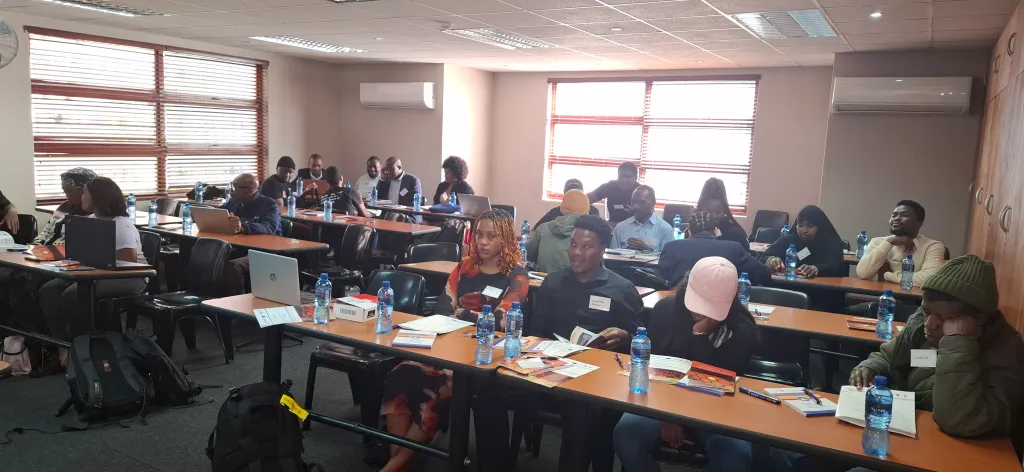
This training was a brave act of group resistance and hope, not just a workshop. It established a space where education and lived experience merged through effective collaboration, giving participants the skills, resources, and solidarity they needed to address institutional neglect and xenophobia. The Dialogue Toolkit for Countering Xenophobia in South Africa evolved into a tool and a representation of the country’s dedication to justice.
However, a sad reality emerged from the stories told: there is still a huge disconnect between legislative protections and real-world situations. While government institutions fail to meet their constitutional and international commitments, migrants and refugees still have to deal with rights abuses, corruption, and bureaucratic obstacles. Therefore, while community-based solutions are essential, they must be accompanied by strong political determination to reform the Department of Home Affairs and the South African Police Service, denounce xenophobia in public, and ensure that everyone is treated fairly under the law.
As the training concluded with a certificate ceremony, the voices of the participants resonated: resilient, determined, and prepared to lead. Their call to action resonates beyond the Diakonia Centre, inviting every stakeholder to contribute to the creation of a South Africa grounded in dignity, inclusion, and human rights.